
What ChatGPT Means for SEO, Visibility, and Getting Discovered
Search used to mean typing a phrase into a box and scrolling through a page of links. That’s no longer the whole story. AI search tools now answer questions directly, changing how people find businesses in a way that affects every website owner, marketer, and shop down the street. It represents a major shift in behavior, not just a new feature bolted onto an old habit.
This article explains what’s driving that shift, why AI adoption is growing fast, and what practical steps help AI understand your business well enough to recommend it. Whether you’re wondering how customers find your business today or preparing for how they’ll find it tomorrow, this is worth ten minutes of your time.
Article Outline
- What’s driving the move toward answer-based search
- ChatGPT’s expanding influence on marketing
- SEO’s changing role now that AI is in the mix
- Practical steps for staying visible online
- Earning a spot in AI-written answers
- A newer discipline: optimizing for answer engines
- Making your business easy for a model to interpret
- Where search seems to be heading next
- Balancing new AI tools with proven SEO practices
- What this all means for local businesses
What Is AI Search, and Why Is It Growing So Fast?
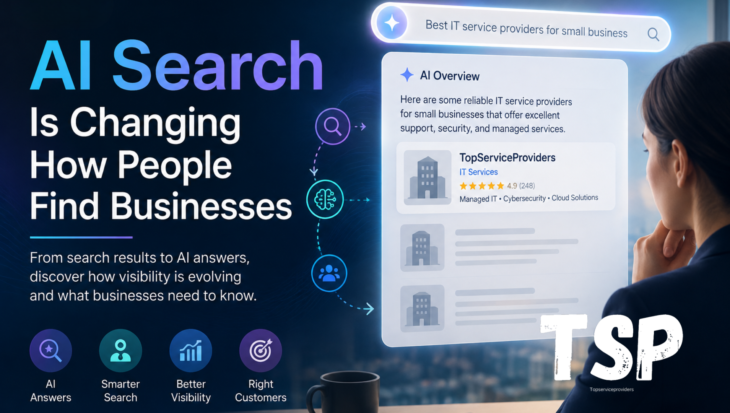
AI search refers to tools that answer a question directly using a generative model, instead of handing back a page of links. Rather than scanning ten results yourself, you ask something in plain language and get a synthesized answer pulled from several sources at once. This is why AI search feels less like a hunt and more like an actual conversation and why search changes like this one tend to feel disorienting at first.
Traditional search engines were built around matching keywords to indexed pages, one query at a time. AI models work differently: they interpret intent and context, then respond conversationally, often handling follow-up questions in the same thread. That difference is reshaping expectations about what “searching” even means, and it’s a big part of why adoption keeps growing fast.
How Is ChatGPT Changing Marketing?
ChatGPT has become the most visible symbol of this shift. Instead of researching a purchase across a dozen browser tabs, people are increasingly asking ChatGPT directly, “what’s a good coffee shop downtown” or “which accounting software fits a small business.” Tools like ChatGPT compress a whole research journey into one conversation, so a brand needs to be part of that conversation, not just present on a results page somewhere.
This matters enormously for digital marketing, because visits driven by an AI tool citing or recommending a business, sometimes called AI traffic, are becoming a measurable channel of their own. Businesses that ignore this risk losing ground as more people discover businesses this way instead of through classic browsing habits, and marketers are already adjusting budgets and content plans in response.
SEO’s Changing Role Now That AI Is in the Mix
In the age of AI, SEO hasn’t disappeared; its job has simply expanded. Traditional SEO focused on ranking as high as possible so a person would click through a results page full of ten blue options. That still matters for plenty of searches, but AI tools often skip the usual pages of links entirely and synthesize an answer from several sites at once.
The right keywords still count, but they aren’t the whole game anymore. Backlinks still signal authority and trust, so link-building hasn’t become pointless; traditional SEO fundamentals are still part of the foundation. What’s changed is the emphasis: you’re no longer optimizing purely to win a spot at the top of a long list of links; you’re optimizing to be the clear, trustworthy source a model actually chooses to summarize. SEO still matters; it’s just one piece of a bigger picture now.
How Can You Stay Visible in an AI-Powered Search World?
Staying visible in an AI-powered search environment takes a different mindset than chasing rankings alone. Because these tools pull information from many places at once, the goal shifts to being visible online across every platform an AI might check: your website, review sites, directories, and social profiles, not just one carefully optimized page.
Genuine visibility here comes from keeping information accurate and consistent across platforms. Conflicting details, like mismatched hours or addresses listed differently in different places, make it harder for a model to trust and confidently cite a business. Consistency, more than any single trick, helps a brand show up reliably in AI answers over time.
What Does It Take to Show Up in AI Search Results?
Showing up in modern search results increasingly means appearing inside an AI-generated summary rather than a standard listing. Google AI Overviews sit at the top of the Google results page, answering a question before anyone scrolls further down. Gemini and Perplexity each draw from their own mix of sources, so visibility across them takes slightly different approaches, and Google’s AI Overviews, in particular, have reshaped how many people experience a simple Google search.
To be considered by these AI search tools, content generally needs to be well-structured, factually accurate, and easy for a model to extract, not just easy for a human to skim. Using a couple of reliable AI tools to monitor how, or whether, your business appears across these platforms gives a much clearer picture of where the gaps actually are.
A Newer Discipline: Optimizing for Answer Engines
Answer engine optimization, often shortened to AEO, is the practice of shaping content specifically so an AI model can pull accurate answers from it. This often starts with structured data and schema markup, which label business hours, services, pricing, and location so a machine can parse them correctly instead of guessing.
This approach also means writing the way people actually ask questions: clear headers, direct answers, and dedicated FAQs. Someone might type a question like “best plumber near me” into an assistant, and a business with a clean FAQ section that addresses exactly that kind of question is far more likely to surface than one filled with vague marketing copy. The goal is simple: give a model clear information it can lift with confidence.
How Do You Help AI Understand Your Business?
Getting a model to help AI understand your business accurately starts with the basics: what you do, where you’re located, who you serve, and what sets you apart. A model can only work with what’s actually published, so a vague “about us” page full of buzzwords does little to help.
Keeping a Google Business Profile current, publishing clear service descriptions, and directly addressing common customer questions all make it easier for AI to summarize a business correctly. Documenting real customer interactions the questions people actually ask, the praise, the complaints gives a model something concrete to draw from instead of forcing it to guess, using natural language rather than internal jargon.
Is This Really the Future of Search?
Every signal points toward this being the future of search rather than a passing trend. As AI-driven search keeps improving, more people will start their research beyond a typical search engine box, heading straight to a conversational assistant instead of a homepage full of ads and links.
That doesn’t mean websites become irrelevant; someone still has to supply the raw material an AI recommends from, after all. But brands that adapt early, treating visibility across AI platforms as seriously as they once treated rankings, tend to come out ahead. Real examples of businesses already earning AI mentions make the shift feel concrete rather than theoretical, and give other owners a template to follow.
Balancing New AI Tools With Proven SEO Practices
The honest answer is that you need both. Crawlability whether a bot can actually read and parse your site matters just as much for newer AI systems as it always has for traditional search engines. Neither approach works if the underlying content and structure is a mess or simply inaccessible.
In practice, this often looks like repurposing existing material: turning long blog posts into concise question-and-answer formats, tightening headers, and adding a bit of markup here and there. Keeping a mix of proven search platforms and newer AI-monitoring tools in the toolkit covers both channels at once without doubling anyone’s workload.
What This Means for Local Businesses
For local businesses, the stakes are especially high, since so many searches are hyperlocal by nature. Local SEO fundamentals accurate listings, reviews, and consistent contact details remain the foundation, but that same accurate business information now also needs to be clean enough for a model to summarize with confidence.
Ultimately, this is about one thing: making sure customers find your business when they need you. Whether someone types into Google out of habit or opens an AI assistant instead, the goal hasn’t changed: it’s still about how people find businesses, and it’s happening across the web faster than most owners expect.
Key Takeaways
- AI-powered search tools now answer questions directly instead of just returning a page of links, and that shift is only accelerating.
- SEO isn’t going away, but it now shares the stage with a newer discipline focused on giving AI models clear, structured, answer-ready content.
- Structured data and clean formatting help a model interpret a business correctly instead of guessing.
- Consistency across a website, directories, and review sites builds real, lasting visibility with AI platforms.
- Keyword strategy and link-building are still relevant; they’re just no longer the only levers that matter.
- Turning existing content into clear, conversational formats helps a business show up well in both classic and AI-generated results.
- Local businesses should keep local fundamentals strong while making listings easier for a model to read.
- Businesses that adapt early to this new landscape will be better positioned as more people turn to AI conversations instead of scrolling through search results.
For business owners: why a TSP listing is a launchpad for growth and growth beyond listings.